Site Preparation
Excavation & Grading in Ottawa
Excavation & Grading overview
What grading actually fixes
Grading is the work of setting the shape of the ground so water goes where you want it. On most Ottawa properties that means moving runoff away from the foundation, away from the garage threshold, and off the driving surface toward a ditch, swale or catch basin.
When grading is wrong, water sits. Water that sits soaks into the granular base, freezes, expands, and lifts whatever is above it. That is the mechanism behind heaved driveways, spring potholes, sunken sections and cracked aprons — and no amount of quality asphalt on top will stop it.
Base depth and compaction
Under a paved surface, granular base does two jobs: it spreads vehicle loads out over the subgrade, and it gives water somewhere to drain instead of pooling directly under the pavement. Both jobs depend on the base being the right depth for the traffic and being compacted properly, in lifts, rather than dumped and levelled.
Compaction is where corners get cut, because it is invisible the day the job finishes and only shows up two winters later. We compact in lifts and set the finished grade before anything gets paved.
Excavation on its own
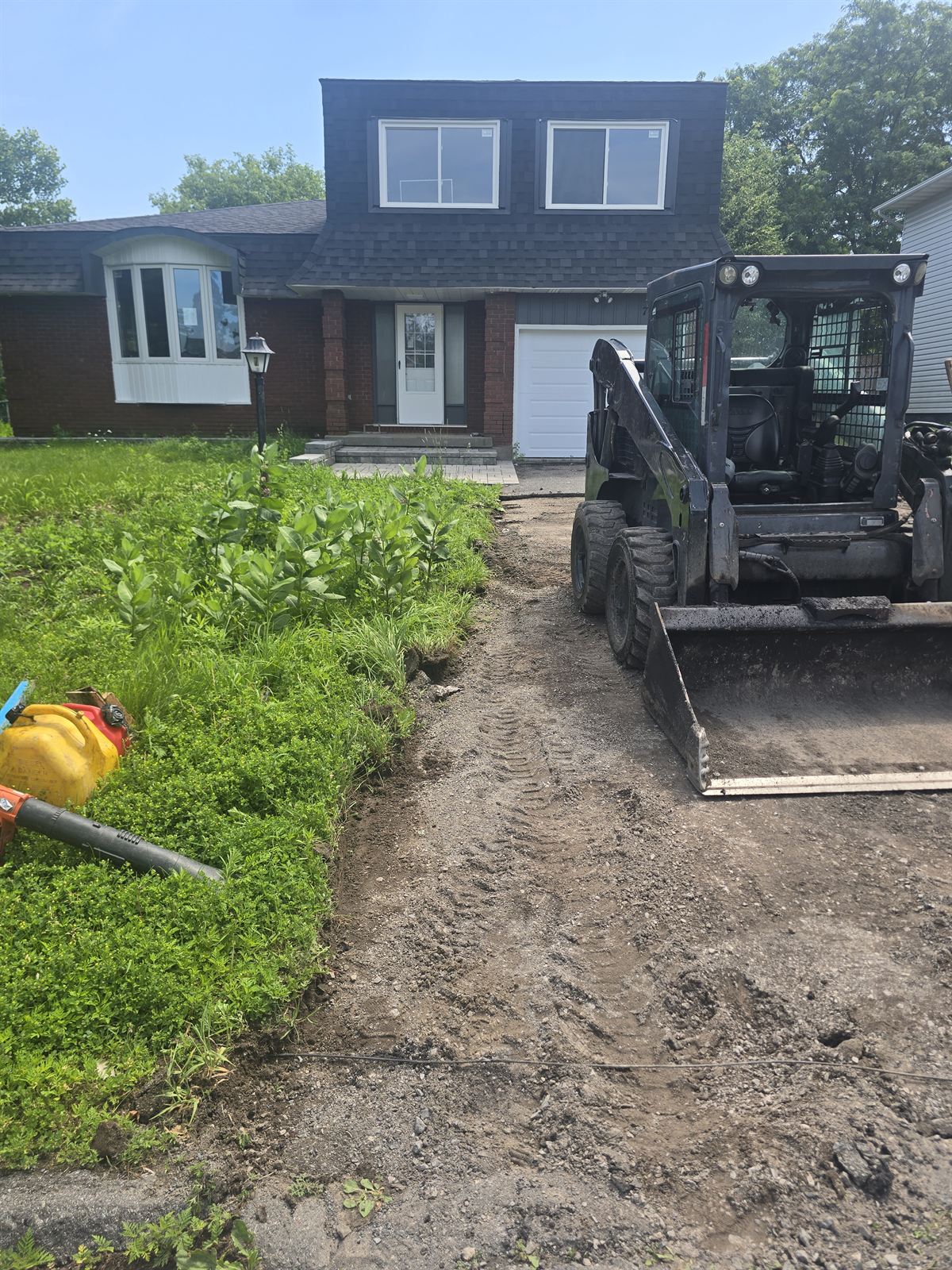
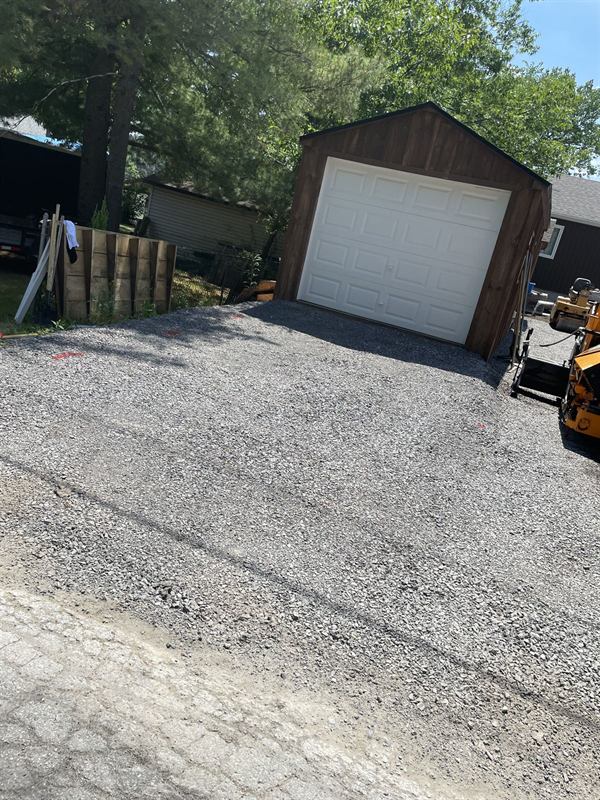
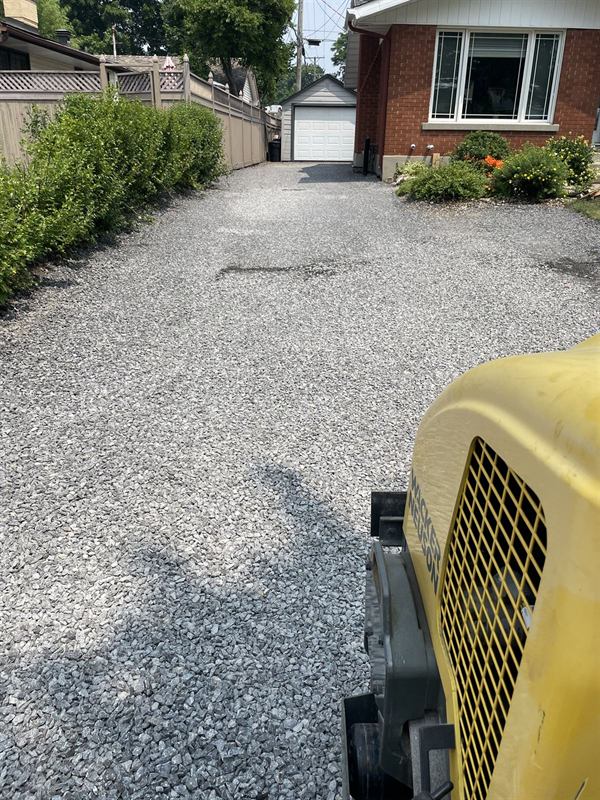
Not every grading job ends in asphalt. We also do standalone site prep and excavation — building up a gravel driveway or parking area, correcting a low spot that floods every spring, preparing a base for interlock or a shed pad, or stripping out a failed surface so a property can be reassessed before committing to a full rebuild.
What's included
- Excavation of existing surface and unsuitable material, hauled off site
- Subgrade inspection and compaction before any base goes in
- Granular base placed and compacted in lifts to the depth the job requires
- Finished grades set to move water away from buildings and off the surface
- Low-spot correction, soft-spot removal and washout repair
- Machine and hand grading in tight areas equipment cannot reach
- Full cleanup and haul-away of excavated material
Start to Finish
What the Process Looks Like
No surprises. Here is exactly how a excavation & grading project runs from the first phone call to the final walkthrough.
Assessment and levels
We look at where water currently goes, identify the low points and the problem areas, and establish what the finished grade needs to be to fix them.
Locates and scheduling
Where digging depth or location requires it, utility locates are arranged before any machine goes in the ground.
Excavation
The existing surface and any unsuitable material below it is removed and hauled off site — not spread around the property.
Subgrade preparation
The exposed subgrade is inspected for soft spots, corrected where needed, and compacted before base material is placed.
Base placement and compaction
Granular base is placed in lifts, each lift compacted, until the specified depth and the finished grade are both reached.
Final grade check
We check the finished slope in the places that matter — at the garage, along the foundation, at the street transition — and correct before the surface goes on.
Recent Work
Excavation & Grading in Ottawa
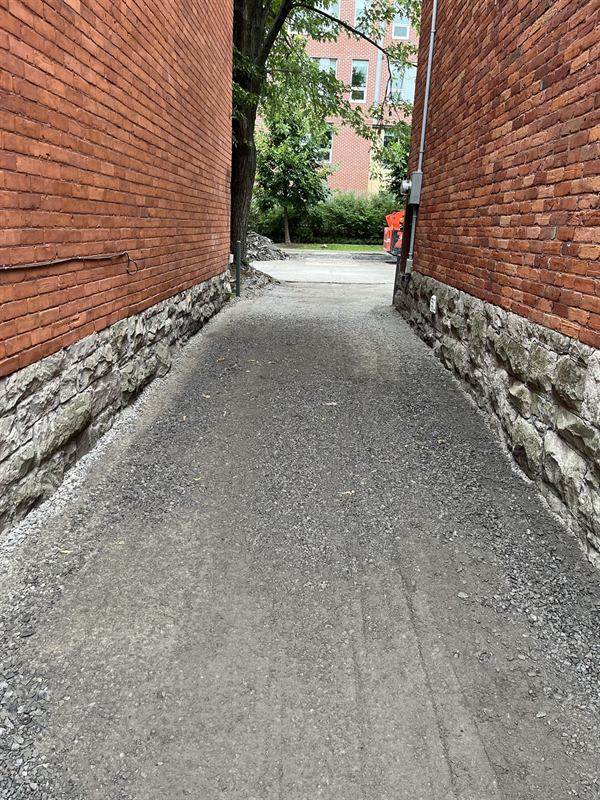
Real Proseal Plus jobs, photographed on site. See more in the full project gallery.
Where We Work
Excavation & Grading Across Ottawa
Our crews cover the entire city of Ottawa, ON and the surrounding area.
- Kanata
- Barrhaven
- Orleans
- Nepean
- Gloucester
- Stittsville
- Riverside South
- Manotick
- Greely
- Downtown Ottawa
Not sure if we reach your area? Get in touch — we are happy to check.
Common Questions
Excavation & Grading FAQs
Why does my driveway hold water in one spot?
Because the finished grade is flat or reversed there, or because the base has settled into a soft spot underneath. Filling the dip with asphalt is a short-term patch — the lasting fix is excavating that area, correcting the subgrade and rebuilding the base to the right slope.
How deep should the granular base be?
It depends on the soil, the drainage and the traffic. A passenger-car driveway on stable ground needs less than a laneway that takes delivery trucks or a commercial drive aisle. We specify the depth after seeing the site, and we would rather over-build the base than come back in three years.
Do I need utility locates?
For most excavation work, yes, and we arrange them. It is free, it is legally required before digging in many situations, and hitting a gas or communications line is a far bigger problem than waiting a few days for the locate.
Can you fix drainage without repaving?
Often, yes. Regrading a low area, correcting a swale, building up a shoulder or improving how water leaves a surface can all be done as standalone work. If the problem is under a paved surface, though, that surface has to come up to reach it.
What do you do with the material you dig out?
It gets loaded and hauled off site as part of the job. Excavated asphalt, failed base and unsuitable soil do not get spread across the lawn or left in a pile for you to deal with.
Can you build a gravel driveway rather than paving?
Yes. A properly built and graded gravel driveway is a legitimate option, especially for long rural approaches. It needs the same base work and the same attention to drainage — it just finishes in compacted granular rather than asphalt.
Also From Proseal Plus
Related Services
Driveway Paving
A driveway is the first thing anyone sees and the last thing anyone thinks about until it fails.
Learn moreRoadway Paving
Private roads, shared laneways and long rural approaches carry more traffic and more weight than a driveway — and they fail faster when the base and drainage are wrong.
Learn moreParking Lot Paving
Your lot takes delivery trucks, snow equipment, and every customer who visits.
Learn moreReady When You Are
Get a Free Excavation & Grading Estimate
Tell us about your project and we'll book a free, no-obligation on-site visit anywhere in Ottawa.