
Hardscaping
Interlocking Paver Installation in Ottawa
Interlock overview
Why interlock fails, and how we avoid it
Interlock that sinks, tilts or spreads apart almost never failed because of the stone. It failed because the base under it was too shallow, was not compacted, or had no edge restraint holding the field together.
A paver surface is a flexible system: individual units transferring load to their neighbours through compacted joint sand, all of it sitting on a screeded bedding layer over a compacted granular base. Take away the compaction or the edge restraint and the whole system loses its interlock — which is literally where the name comes from.
So we build interlock the same way we build a driveway base: excavate to depth, compact the subgrade, place and compact granular in lifts, screed the bedding layer flat, then set the units and lock the whole field in with edge restraint and compacted joint sand.
What interlock is good for
Front walkways and entrance landings, because a paver surface can be lifted and reset if a utility ever needs to come through, and because the pattern and colour give a house a defined entrance.
Patios and backyard living space, where the surface has to look good up close and drain without sitting in puddles.
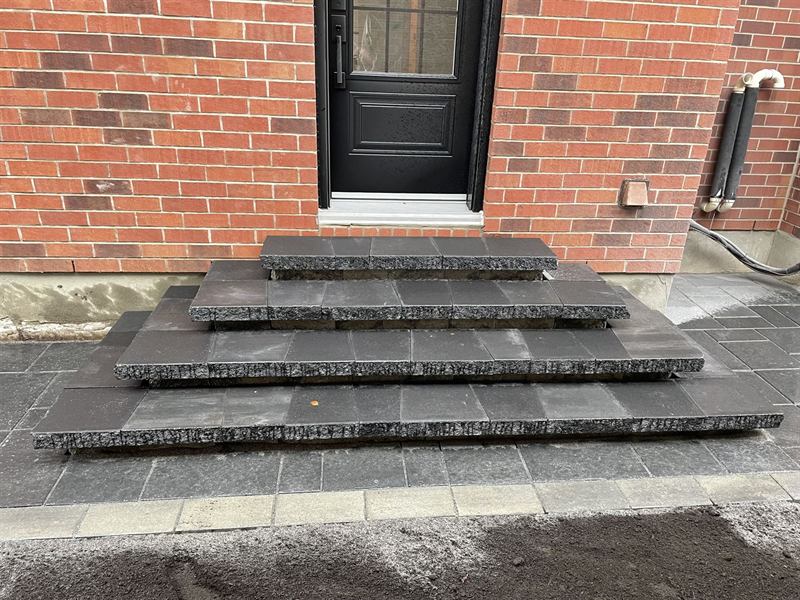
Steps and grade changes, where a stacked, properly bedded unit system handles the transition cleanly.
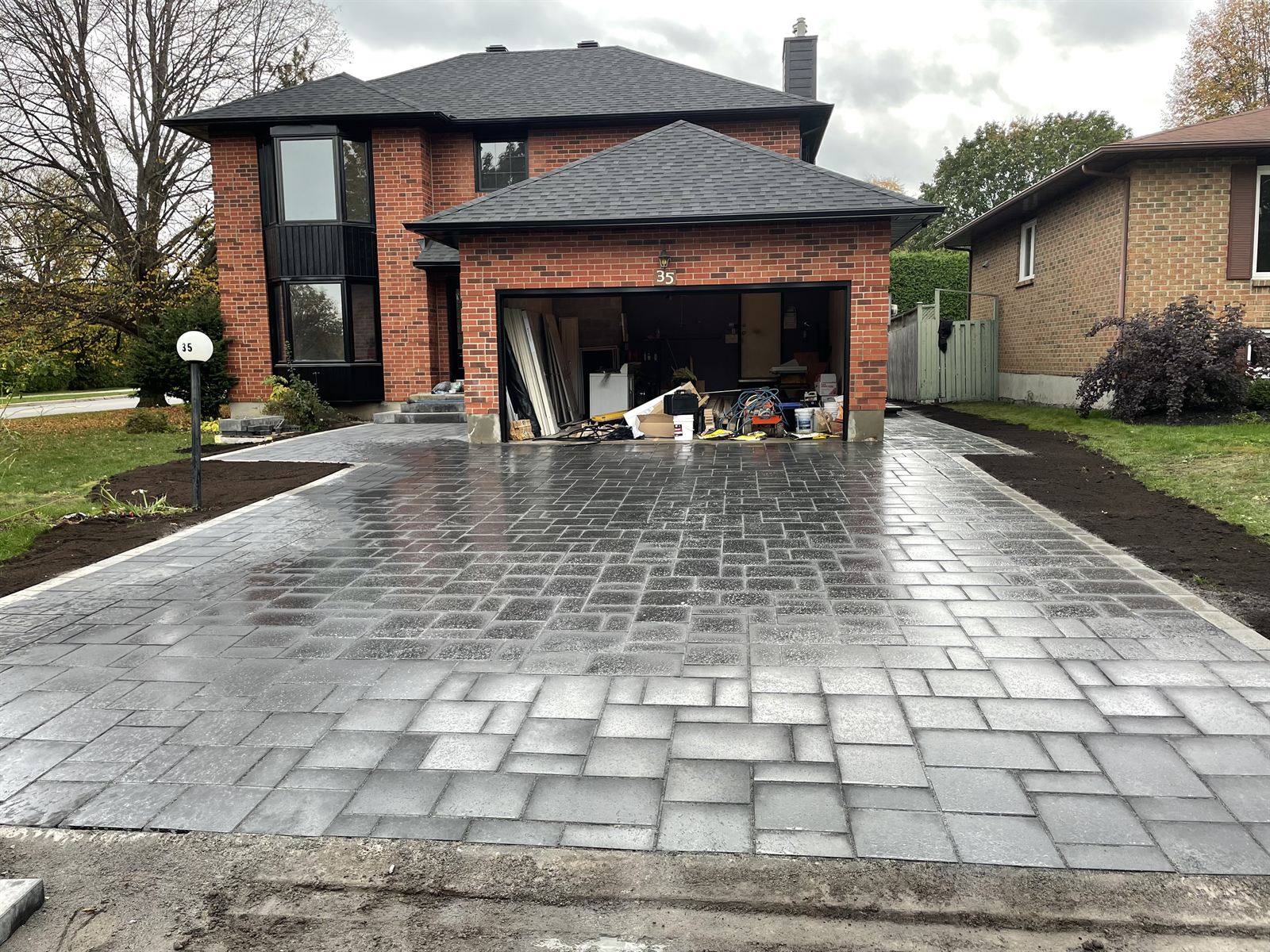
Driveway borders, where a soldier course of interlock frames the asphalt and gives the edge physical support at the same time — a detail that both looks deliberate and extends the life of the asphalt edge.
What's included
- Excavation to the depth the application requires, with material hauled away
- Compacted granular base placed in lifts
- Screeded bedding layer for a flat, consistent setting bed
- Pavers laid to the pattern and cut cleanly at all edges and obstacles
- Edge restraint installed on every open edge
- Joint sand swept in and compacted so the field locks together
- Grading set so the finished surface drains away from the building
Start to Finish
What the Process Looks Like
No surprises. Here is exactly how a interlock project runs from the first phone call to the final walkthrough.
Design and estimate
We look at the space, talk through pattern, unit and colour options, confirm how the area needs to drain, and give you a written price.
Layout and excavation
The area is laid out and excavated to the depth needed for base, bedding and unit thickness — deeper for a driveway than for a walkway.
Base and compaction
Granular base is placed in lifts and compacted, with the slope for drainage established at base level rather than corrected at the surface.
Bedding and setting
The bedding layer is screeded flat and the units are set to pattern, working off established string lines so the courses stay true across the field.
Cuts and edge restraint
Perimeter and obstacle cuts are made cleanly, and edge restraint is installed on every open edge to hold the field.
Jointing and cleanup
Joint sand is swept in and the surface is compacted so the sand fills fully, then the site is cleaned and walked with you.
Recent Work
Interlock in Ottawa
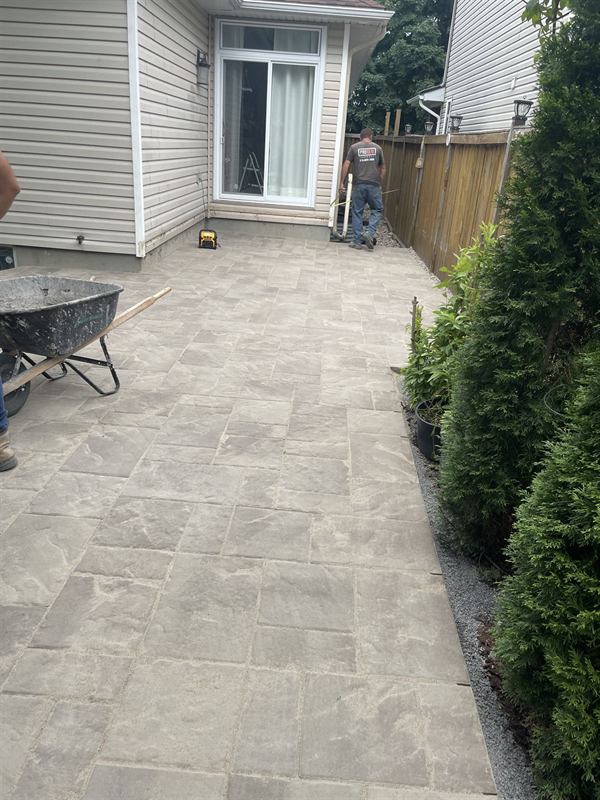
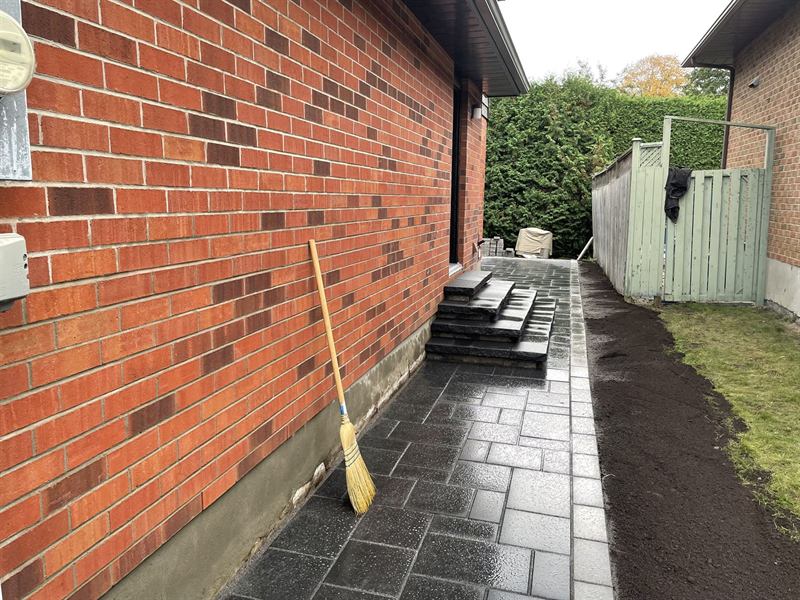
Real Proseal Plus jobs, photographed on site. See more in the full project gallery.
Where We Work
Interlock Across Ottawa
Our crews cover the entire city of Ottawa, ON and the surrounding area.
- Kanata
- Barrhaven
- Orleans
- Nepean
- Gloucester
- Stittsville
- Riverside South
- Manotick
- Greely
- Downtown Ottawa
Not sure if we reach your area? Get in touch — we are happy to check.
Common Questions
Interlock FAQs
How long does interlock last?
Decades, if the base is right. The units themselves are extremely durable — what determines lifespan is whether the base was compacted properly and whether edge restraint is holding the field. Individual units can also be lifted and reset if something settles or a utility needs access, which is a real advantage over a poured surface.
Can you install interlock over an existing concrete or asphalt surface?
It is possible in some situations, but it is usually the wrong call. An overlay raises the finished height — often above door thresholds or against siding — and it inherits whatever drainage problem the surface underneath already had. We would rather excavate and build the base correctly.
Does interlock need to be sealed?
It is optional. Sealing deepens the colour, makes the surface easier to clean and helps resist staining and joint sand loss. Plenty of interlock is left unsealed and performs fine. If you do seal, it is a maintenance cycle you repeat, not a one-time job.
Will weeds grow between the pavers?
Weeds in interlock joints come from seed landing on top and germinating in the joint sand — not from growing up through the base. Keeping the joints full and sweeping the surface handles most of it, and polymeric joint sand reduces it further.
Can interlock be used for a full driveway?
Yes, and it looks excellent, but it is a heavier build than a walkway or patio. A driveway application needs a deeper compacted base, thicker units rated for vehicle loads, and careful attention to edge restraint where vehicles turn.
Do you match existing interlock?
We will always try. Manufacturers do discontinue product lines and colours fade over time, so an exact match is not always possible on older installations. Where it is not, blending the new work into a defined area or border usually looks far better than a near-miss patch in the middle of a field.
Also From Proseal Plus
Related Services
Ready When You Are
Get a Free Interlock Estimate
Tell us about your project and we'll book a free, no-obligation on-site visit anywhere in Ottawa.